

PRESS RELEASE AMNESTY INTERNATIONAL SLOVAKIA
18 JUNE 2026
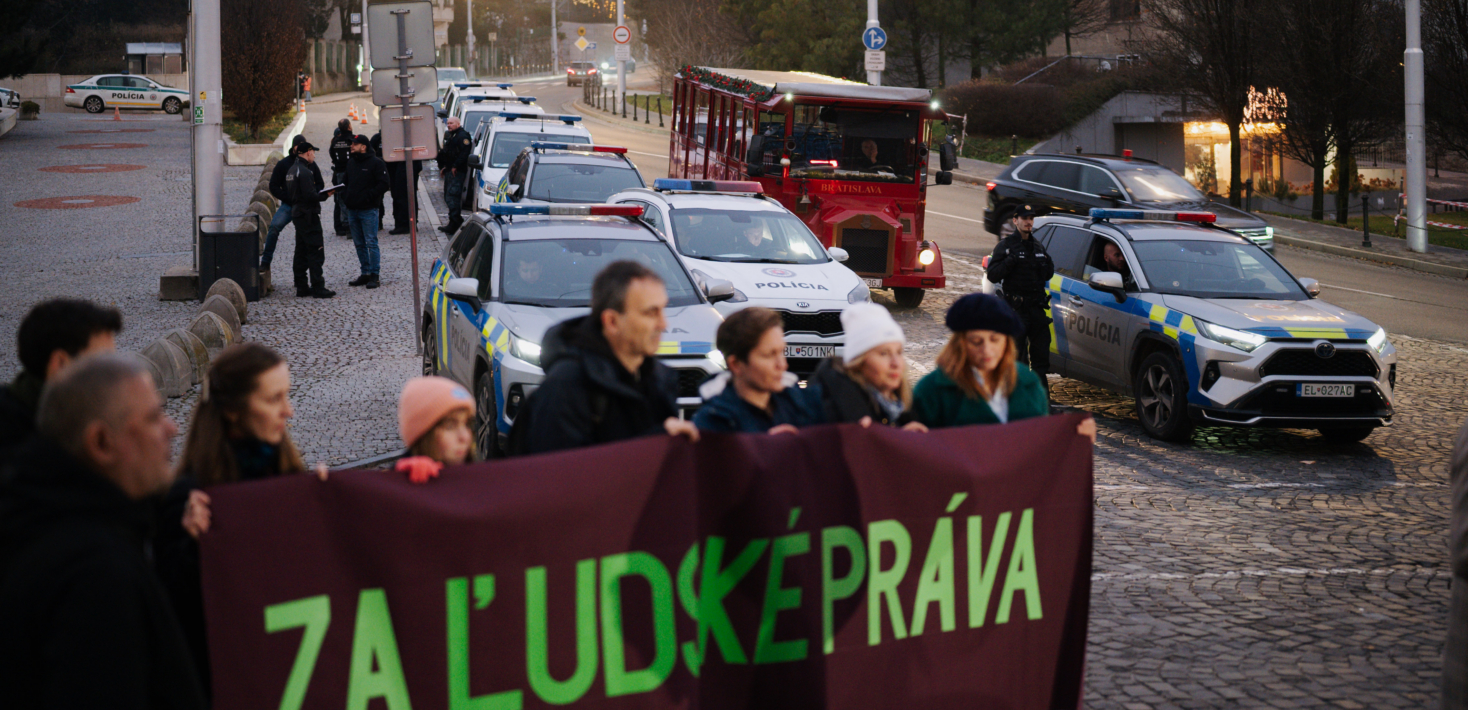
Human rights defenders, non-governmental organizations (NGOs) and civil society more broadly in Slovakia are facing increasing pressure, stigmatization and intimidation, said Amnesty International Slovakia in a briefing published today.
Human rights defenders under the weight of attacks: Continuing erosion of civic space in Slovakiahighlights the deterioration in conditions for Slovak civil society since 2024 and documents cases of online and physical harassment of those working in civil society and stigmatisation by politicians. It also underscores the harm that the restrictions on funding and an increased administrative burden by authorities has placed on NGOs is having in Slovakia.
The report also highlights the stifling of meaningful civil society participation in the formulation of public policies and legislation that directly affect its functioning. The briefing is based on responses from 126 NGOs across Slovakia and 13 in-depth interviews with human rights defenders.
“What we are seeing is not routine criticism of non-governmental organizations but persistent attacks on civic space.”
“People and organizations defending human rights in Slovakia report how they are operating in an increasingly hostile environment. They are the target of attacks, suspicion and intimidation. Their credibility, work, funding and key role in public policy debates are being consistently undermined,” said Rado Sloboda, Director of Amnesty International Slovakia.
“What we are seeing is not routine criticism of non-governmental organizations but persistent attacks on civic space. When state authorities undermine civil society in this way, it threatens not only specific organizations, but the protection of human rights of all.”
As many as 35% of the 126 organizations who took part reported that they, or their staff and members, had faced online harassment, including cyberbullying, hacking, threats or smear campaigns. A further 18% of organizations reported harassment in physical spaces, including threats, personal attacks or damage to property. One of the human rights defenders told Amnesty International:
“For us, the environment has never been favourable and we’ve been the target of such attacks practically non-stop…in the media and, ultimately, in person. So for us, this isn’t a new situation at all and I see it more as having expanded. Now the attack is directed at the entire sector and a much broader range of organizations.”
Many organizations also point out that harmful rhetoric from state officials is contributing to a further deterioration of the situation and some reported this leading to an increased risk of attacks from the public.
The briefing also shares the results of the responses from NGOs and human rights defenders to questions on the growing financial insecurity faced by organizations. Some NGOs reported that they had lost donors or stopped applying for public funding for fear of reprisals.
“A strong and independent civil society is an essential part of the protection of human rights.“
The pressure on civil society is also reflected in an increased administrative burden on associations. More than half of the NGOs reported that state inspections and administrative requirements are more burdensome than in the previous five years.
Amnesty International also underscores the negative impact of legislative measures adopted over the past two years that restrict civic space, public participation and organizations’ access to funding.
Among other things, the report addresses the amendment to the law on non-governmental organizations, which placed disproportionate administrative burdens and could have had a chilling effect on civil society. The Constitutional Court of the Slovak Republic ruled that the amendment was unconstitutional, but state authorities subsequently announced a further increase in its monitoring of NGOs.
“A strong and independent civil society is an essential part of the protection of human rights. The Slovak authorities have a duty to create a safe and enabling environment for people and organizations that stand up for the rights of others – not to stigmatize or silence them,” said Katarína Medľová, Researcher at Amnesty International Slovakia.
Amnesty International calls on the Slovak authorities to change their approach to civil society. They must publicly condemn attacks and threats against human rights defenders, and refrain from stigmatizing rhetoric about them too. Civil society actors must be able to take part safely and meaningfully in shaping the policies and decisions that affect their work and the state has a duty to ensure the environment is one in which they can conduct their vital work free from fear and intimidation.
The state must also guarantee the right to freedom of association, including the right to access funding, and ensure an enabling environment for organizations to carry out their vital work free from undue restrictions.
Despite mounting pressure, the organizations stress that civil society in Slovakia remains united and determined to continue its work.